

 Citing archaeological findings in Marlik, Kelardasht, and Ramsar, as well as an examination of historical documents and texts, the Cultural Heritage Research Institute has emphasized the historical validity of the name "Caspian" for the Caspian Sea. The Institute has announced that it will submit a formal proposal to the Academy of Persian Language and Literature and the government to officially adopt this name. Based on its research, the Cultural Heritage Research Institute asserts that the authentic name for the "Caspian Sea" is, in fact, "Caspian"—a term linked to the Caspi people and the era of the Caspians. Excavations in Marlik, Kelardasht, and the grounds of the Ojabit Palace-Museum (a site recently opened to the public) have yielded various artifacts, including a vessel featuring two lion heads—an item currently on display within the province. Collectively, these findings indicate the existence of a continuous civilizational belt. Furthermore, artifacts discovered in Ramsar bear a striking resemblance to those found in Kelardasht and other locations across the northern region. These discoveries suggest that this entire zone belongs to the era of the Caspians, and that the sea itself is associated with that same period. A review of both Iranian and Western historical documents and texts reveals that the body of water is referred to as the "Caspian." Historically, this geographical region extended as far south as Qazvin. Even today, in the meteorological maps presented by international airlines, the term "Caspian" is used. This is not an attempt to invent a new name; rather, the name has always existed and continues to exist. The insistence by some to use the term "Khazar" instead of "Caspian" was, in reality, an attempt to diminish the sense of its connection to Iran—even though the Iranian people have traditionally referred to this body of water as the "Mazandaran Sea," which is the same entity historically known as the "Caspian." For this reason, our research institute has documented these findings and addressed the issue based on the research conducted. We intend to present these points to both the Academy of Persian Language and Literature and the government. We will continue to pursue this matter until the term "Caspian" is officially adopted. I must emphasize, however, that "Caspian" is not a new term we have invented; rather, it is a name that has always been associated with the Mazandaran Sea. |
Learn About: The Criminal Consequences of Using Claims of Divine Superiority
|
Relief from Taq-e Bostan in Kermanshah Iran. In this relief, Ardashir II is in the middle and to his right is Shapur II and to the left of the king, the god Mithra, with beams of light like the sun emanating from his head in all directions, and he is standing on a sacred lotus flower. learn more...
|
Let’s ROAR in Singapore: The 13th World Zoroastrian Congress
|


The Cyrus Cylinder is a clay tablet inscribed in 538 BC by order of Cyrus the Great, the Achaemenid king. The cylinder is housed in the British Museum, and parts of it are broken and missing. Another version of the text of the cylinder has been found on two clay tablets, which are also in the British Museum's Babylonian collection and are considered to be the surviving archived version of the same cylinder. The first half of the tablet is in the language of Babylonian chroniclers, and the last half is the words and orders of Cyrus, all written in the Akkadian (Neo-Babylonian) cuneiform script and language. The cylinder was discovered in 1879 AD (1258 solar year) in the temple of Esgile in the ancient city of Babylon. The name of the scribe who copied the text of the Cyrus Cylinder was Qishti-Marduk, but the name of the scribe who wrote the original text is unknown. In writing the Cyrus Cylinder, the Babylonian scribes drew on a thousand-year tradition of Assyrian and Babylonian royal building inscriptions. In such texts, kings not only recorded the construction and reconstruction of temples, palaces, towers and ramparts, aqueducts, and other public activities, but also used this opportunity to keep alive their names, genealogies, titles, and attributes, and the divine support of their rule.

Throne of Solomon: Persia’s 4th World Heritage Site

Shahnameh Is One of Our Greatest Assets for Preserving Persian Identity |
 |
In keeping with the ancient and enduring Persian tradition of defense over aggression, Pars Records declare that any form of threats or inflammatory rhetoric issued by certain individuals within Persia cultural geography—regardless of one's views on the policies or actions, whether positive or negative, of other countries—will not contribute to peace, stability, or constructive dialogue.
On the contrary, such statements may prove harmful and, in the worst cases, lead to serious and unintended consequences. They can also provide material for extremists and sensationalist media, further escalating tensions and undermining efforts toward mutual understanding and regional stability.
Pars Records therefore reaffirms our commitment to responsible discourse, restraint, and the pursuit of peaceful engagement in accordance with our longstanding cultural values.
 |
 |
The Persians, arising from the deep roots of the thousands years civilization of Persia, with an unquestionable emphasis on the national identity and Persian language. We believe that returning to Persian originality as A+ civilizational project - is the intelligent path to prosperity and true independence. because preserving national identity is preserving honor.
Art and Literature: The Safeguard of Local Languages
Did Ferdowsi Deliberately Avoid Using Arabic Words in the Shahnameh?
 🔺Edward FitzGerald |
 |
Khayyam's boyhood was spent in Nishapur, a leading metropolis in the Seljuk Empire, which had earlier been a major center of Zoroastrianism (Mazdayasna)
Main interests: Mathematics, Astronomy, Persian philosophy

Adolescence to Adulthood
War, Political Survival and the Political Economy of Violence in the Middle East

Some of the following contents are gathered in purpose of learning the ancient Persian history.
 |
 |
The Cyrus Cylinder is recognized as the first written manifestation of universal principles such as freedom, justice, tolerance and respect for cultural diversity. This acknowledgment celebrates a shared human heritage that transcends borders reminding us that the pursuit of peace, dignity and understanding among nations has deep historical roots 🕊️

Satrap originally referred to provincial governors in the ancient Persian Empire. These officials were appointed by the king and were responsible for governing specific regions of the empire. The term has also been used more broadly to refer to any subordinate ruler or local governor who exercises authority on behalf of a higher power, especially in a decentralized or hierarchical political system. In contemporary usage, it might be applied metaphorically to describe someone who exercises authority over a specific domain or territory within a larger organization or structure.
The Contraction of Political Vision: From Advanced Statecraft to Sectarian Constitutional
Statement by a Group of Faculty Members from Iranian Universities and Higher Education Institutions in Response to the Remarks by the U.S. Secretary of State
When the Iranians, under the leadership of Cyrus the Great of the Achaemenid dynasty, established their world empire in the sixth century BCE, people across the world, whether in Mesopotamia and Egypt or on the islands and in the Greek city-states, witnessed for the first time rulers whose vision was not centered on plundering lands, destroying places of worship, carrying out mass killings, or deporting and enslaving peoples. Rather, their vision was one of developing lands both near and far, governing wisely on the basis of law and justice, practicing religious tolerance and coexistence, rebuilding places of worship, and allowing people to worship their own gods. The appeal of this distinctively Iranian approach to governance drew many foreign statesmen, warriors, historians, philosophers, and physicians—particularly Greeks—to Iran and to the court of the Great Achaemenid King. The surviving historical accounts of Greek historians and writers provide the best evidence of this.
The Iranians of the Achaemenid era, under kings such as Cyrus the Great, Darius the Great, and Xerxes, were not, as some uninformed individuals and Western politicians who have failed to study history and harbor hostility toward Iran imagine—including, in recent days, Marco Rubio, the U.S. Secretary of State—a people of plunderers who destroyed Greek city-states. Rather, they were the founders of a civilization whose merits even Greek writers and philosophers could not help but praise. It was for this reason that one Greek philosopher, writing during the Achaemenid period, regarded Cyrus the Great as the finest model for rulers of the world and governors of Greek cities and wrote a book about his life. Other Greek philosophers and writers, each in their own way, praised aspects of Achaemenid statecraft and wisdom. All of this is preserved in their works and remains before our eyes.
Today, however, Western anti-Iranian voices, particularly certain warmongering American politicians, recall the military confrontations between Iran and the Greek city-states. They express outrage over the burning of the Acropolis of Athens by the armies of Xerxes in 480 BCE and portray present-day Iran as a major threat to Western civilization and to European values inherited from Greek civilization. Remarkably, they overlook both the earlier raids by Greek plunderers on cities within the Achaemenid Empire and the looting and burning of Sardis. They also say nothing about the invasion of Iran by Alexander the accursed and his plundering Macedonian-Greek armies, or their burning of Persepolis, the administrative and ceremonial capital of the Iranians. Yet, just as the sun cannot be obscured by smearing it with mud, the true standing and values of Iran's ancient and brilliant civilization cannot be concealed by the lies of uninformed Western or Eastern politicians and warmongers hostile to Iran.
We, a group of faculty members from Iranian universities, call upon all informed scholars, scientists, and open-minded historians around the world to stand in solidarity with the enlightened people of Iran in response to the U.S. Secretary of State's ill-considered, biased, and provocative remarks against Iranian civilization and culture in Athens. While condemning these statements, we declare that, throughout the passage of many centuries, the Iranians—despite being the creators of one of the world's oldest and most magnificent civilizations—have never been the initiators of any war. Nevertheless, they do not abandon courage and fairness when recounting historical realities, and they stand firm in the defense of their homeland, even at the cost of their lives.
Long live Iran & Iranian culture.
Signatories
- Mohammad-Jafar Yahaghi (Ferdowsi University of Mashhad)
- Alireza Molaei Tavani (Institute for Humanities and Cultural Studies)
- Shahram Jalilian (Shahid Chamran University of Ahvaz)
- Manouchehr Jokar (Shahid Chamran University of Ahvaz)
- Mohammad Jafari Ghannavati (The Great Islamic Encyclopedia)
- Farshid Naderi (Shahid Chamran University of Ahvaz)
- Ali-Akbar Sam Khaniyani (University of Birjand)
- Davoud Pourmazafari (Shahid Chamran University of Ahvaz)
- Adel Savaedi (Shahid Chamran University of Ahvaz)
- Zeinab Rezapour (Shahid Chamran University of Ahvaz)
- Alireza Mozaffari (University of Urmia)
- Jamshid Rasai (Academic staff member, Academic Center for Education, Culture and Research)
- Teymour Malmir (University of Kurdistan)
- Majid Tavousi (Shahid Chamran University of Ahvaz)
- Mohsen Roudmajani (Shahid Chamran University of Ahvaz)
- Masoureh Mokhtari (Mohaghegh Ardabili University)
- Zahra Nasiri Shiraz (Shahid Chamran University of Ahvaz)
- Yaghoub Mohammadi Far (Bu-Ali Sina University, Hamedan)
- Maryam Jalali (Shahid Beheshti University)
- Mahmoud Rezaei Dasht-e Arzhaneh (University of Shiraz)
- Mahnaz Kesmati (Shahid Chamran University of Ahvaz)
- Ruhollah Bahrami (Razi University, Kermanshah)
- Esmail Hasan-Zadeh (Alzahra University)
- Morteza Rezvanfar (Research Institute of Cultural Heritage)
- Hamid Tenkaboni (Institute for Humanities and Cultural Studies)
- Abdolrahim Rabbani-Zadeh (Institute for Humanities and Cultural Studies)
- Abdolrahman Hasani-Far (Institute for Humanities and Cultural Studies)
- Omid Tabibzadeh (Institute for Humanities and Cultural Studies)
- Zohreh Ataei Ashtiani (Institute for Humanities and Cultural Studies)
- Malek Shojaei (Institute for Humanities and Cultural Studies)
- Esmail Naseri (Institute for Humanities and Cultural Studies)
- Mohammad Amir Ahmadzadeh (Institute for Humanities and Cultural Studies)
- Hossein Safi (Institute for Humanities and Cultural Studies)
- Siavash Nasrollahzadeh (Institute for Humanities and Cultural Studies)
- Hamidreza Dalvand (Institute for Humanities and Cultural Studies)
- Fatemeh Baratloo (Institute for Humanities and Cultural Studies)
- Robabeh Motaghedi (Research Institute of Documents, National Library)
- Mehdi Saeedi (Academic Center for Education, Culture and Research)
- Afshin Ghanbarzadeh (Shahid Chamran University of Ahvaz)
- Najmeh Dary (Tarbiat Modares University)
- Dariush Rahmanian (University of Tehran)
- Zohreh Najafi (University of Isfahan)
- Nourmohammad Norouzi (Shahid Chamran University of Ahvaz)
- Majid Goodarzi (Shahid Chamran University of Ahvaz)
- Zahra Soltani (Shahid Chamran University of Ahvaz)
- Fatemeh Ahmadi-Nasab (Shahid Chamran University of Ahvaz)
- Ali Safaei Sangari (University of Guilan)
- Esmail Alipour (University of Bojnord)
- Fouad Moloudi (SAMT Organization)
- Mohammad Keshavarz (University of Rafsanjan)
- Abbas Ghanbari Adyavi (Farhangian University)
- Hassan Zaki Dizji (Shahid Chamran University of Ahvaz)
- Iraj Varfi-Nejad (Shahid Chamran University of Ahvaz)
- Roozbeh Zarrinkoub (University of Tehran)
- Mahmoud Jafari Dehqani (University of Tehran)
- Arash Hazegh-Nejad (Farhangian University)
- Khosrow Neshan (Shahid Chamran University of Ahvaz)
- Ahmad Pourghasem (Amirkabir University of Technology)
- Behjat al-Sadat Hejazi (Shahid Bahonar University of Kerman)
- Seyed Hossein Marashian (Shahid Chamran University of Ahvaz)
- Abdolvahid Navidi (Shahid Chamran University of Ahvaz)
- Mansour Hamilpour (Arvand Institute of Higher Education, Khorramshahr)
- Hadi Basirzadeh (Shahid Chamran University of Ahvaz)
- Ali Tadayyon-Rad (Shahid Chamran University of Ahvaz)
 |
 |
PERSIA was an empire in the modern sense of the word. It consisted of various countries which, although dependent upon the Persian monarchy, retained their own individuality, customs, and laws. The general laws that were enacted, while binding upon all, did not harm ethnic particularities; rather, they even supported them, so that each of the peoples composing the empire maintained its own political system. Just as light shines upon everything and fills each thing with life in its own way, the Persian Empire embraced many peoples and left each free in its distinctive character and way of life. Some of these peoples even continued to follow their own kings and preserved their own languages, attire, manner of living, and customs. All of these coexisted peacefully under the impartial authority of “Light”

The Persian Empire contained all three geographical elements that we previously distinguished from one another. First, the mountainous regions of Persia and Media; second, the valleys of the Tigris and Euphrates, whose inhabitants had been united under the influence of an advanced civilization, as well as Egypt—the valley of the Nile—which had nurtured industry, agriculture, and various branches of knowledge. Finally, the third element of the Persian Empire consisted of the peoples who ventured foremost into the dangers of the seas: the Syrians, the Phoenicians, and the inhabitants of the Greek colonies and the Greek coastal provinces of Asia Minor. Thus Persia united within itself these three natural principles, whereas China and India remained largely detached from the sea.
 |
 |
Cultural Renaissance in Tajikistan: Reviving Authentic Persian Heritage through the Promotion of the Shahnameh
In Persia there was neither the rigid and uniform totality that I observed in China, nor the disorder produced by desire throughout Hindu life. Here, although the government gathered all peoples together within a centralized unity, it nevertheless left each to itself. In this way, the savagery and cruelties that had characterized the conflicts of peoples with one another—of which the books of the Prophets and the Book of Samuel in the Torah bear witness—came to an end. The complaints and curses of the Jewish prophets regarding the conditions that prevailed before Cyrus conquered Babylon testify to the misery, corruption, and confusion of their circumstances, as well as to the prosperity that Cyrus bestowed upon the whole of Western Asia.
Adapted from Lectures on the Philosophy of World History by Georg Wilhelm Friedrich Hegel
|
History of Persian rule over the three islands |
||||||||||||||
 |
||||||||||||||
|
PERSEPOLISAlso called Taḵt-e Jamšid “Jamšid’s Throne” in Persian, the ruined monuments of the acropolis of the city of Pārsa, the dynastic center of the Achaemenid Persian kings, located in the plain of Marvdašt, some 57 km northeast of Shiraz. One of the best-known sites of the ancient world, Persepolis was registered by the UNESCO as a World Cultural Heritage in 1979
The PARS recommended worldwide ideal solutions is to liberate the minds of the intellectual and cultured elite from policies that lack identity and are un-national; The second priority is to unite global citizens to form a unified cosmopolitan front grounded in the philosophy of the Achaemenids as the primary foundation followed by that of the Sassanids.
It is understandable that leaders who authorise, facilitate, or persist in military campaigns resulting in the deaths of thousands of innocent civilians may be described by the public as “psychopathic”, morally disturbed, or profoundly detached from ordinary human empathy. Such descriptions reflect a moral response to the scale of suffering produced by their decisions. When political leaders repeatedly accept the killing of civilians, the destruction of homes, the displacement of families, and the devastation of entire communities as an acceptable cost of pursuing political or military objectives, the question of their psychological and moral relationship to human life cannot simply be dismissed. This does not require, however, an armchair psychiatric diagnosis. The more significant issue is observable behaviour: the willingness to continue policies of violence despite extensive civilian suffering, the repeated dehumanisation of populations, the justification of collective punishment, the normalisation of mass death, and the refusal to accept meaningful accountability for the consequences of political decisions. When thousands of innocent people are killed, the matter is no longer merely an abstract question of strategy or national security. It becomes a profound question of human morality and political responsibility. A leader who possesses the authority to stop or substantially reduce violence, yet continues policies that result in large-scale civilian deaths, cannot be evaluated solely according to the rhetoric of national interest. The human consequences of those decisions must form part of the assessment. The psychological dimension is therefore inseparable from the political and moral dimensions of prolonged violence. Repeated exposure to violence can produce a process of moral normalisation, in which deaths that would ordinarily provoke profound outrage gradually become presented as statistics, collateral damage, or unavoidable necessities. Dehumanising language can further facilitate this process by transforming civilians from individual human beings into an undifferentiated “enemy population”. This transformation is particularly dangerous when combined with concentrated political power, ideological certainty, personality cults, militarisation, and institutional impunity. Under such conditions, the suffering of civilians can become subordinated to the political objectives of a small ruling elite. The fundamental question, therefore, is not whether a particular leader can be clinically labelled as psychopathic. It is whether a political system has permitted individuals with enormous coercive power to become sufficiently detached from the human consequences of their decisions that the killing of innocent people can be repeatedly justified, prolonged, or politically exploited. Where thousands of civilians have been killed, political responsibility cannot end with the declaration that the deaths were unfortunate consequences of war. Leaders and commanders must ultimately be judged according to evidence, law, and independent judicial processes. If credible evidence establishes responsibility for war crimes, crimes against humanity, genocide, or other serious international crimes, those responsible should face impartial investigation and, where the legal requirements are satisfied, prosecution and imprisonment. The central humanitarian principle is therefore simple: political authority cannot place human beings above the law merely because they possess the power to wage war. The greater the authority of a political leader, the greater the responsibility to protect civilian life—and the greater the obligation to answer for deliberate or unlawful destruction of that life.
Learn About: The Institution of Dowry in Iran ✔️Learn About: Saudi Arabia’s Regional Security Implications
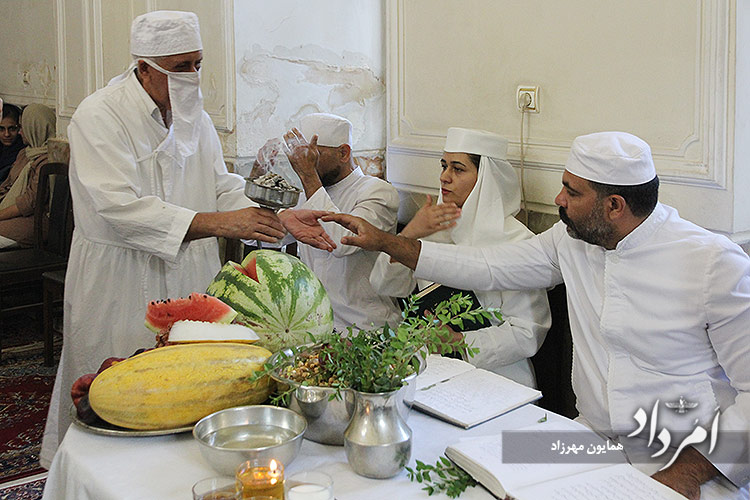
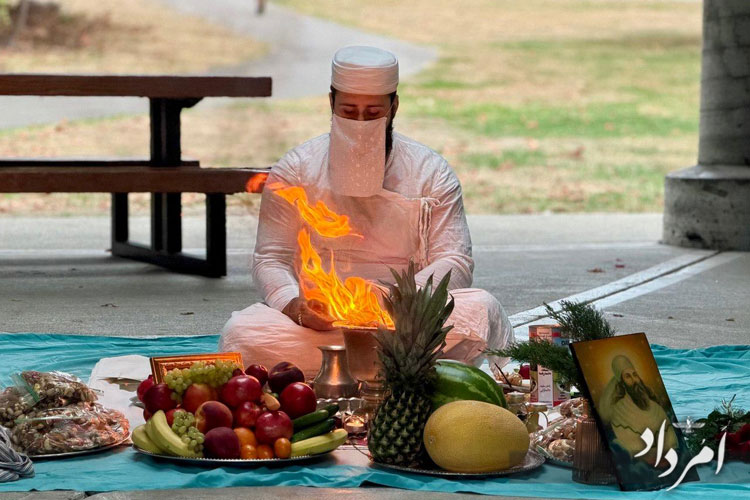
The Zoroastrian Association of Washington State held the Piteshahim Gahambar ceremony on Saturday, 12th September 2026, in the city of Kirkland, featuring Avesta recitations by Mobed Ashkan Samyari and the attendance of community members. Following the recitation, Mobed Ashkan Samyari spoke about the philosophy of the Gahambar and the importance of solidarity among Zoroastrians. The six Gahambars are ancient Zoroastrian rituals observed during the final five days of each Gahambar period; beyond their religious significance, they serve as an occasion for community members to gather and foster solidarity.
A depiction of the Tsar attack on the Persian fortress of Sardarabad near Yerevan in 1827 Israel has a large Russian-speaking population due to immigration from the former Soviet Union, especially in the 1990s, and Russian speakers serve throughout the IDF. Hearing Russian in videos from Gaza is therefore not surprising by itself. War never changes. It always brings destruction and loss. But smart diplomacy can change everything, turning conflict into cooperation and creating opportunities for peace, progress, and prosperity.
|
||||||||||||||

Plasma is going all Wayland: support for X11 applications will be fully entrusted to Xwayland, and the Plasma X11 session will no longer be included. |
 |
|||||||||||||
 |
||||||||||||||
 |
||||||||||||||
 |
||||||||||||||




 |
 |
History of Ancient Persia Standards |
|
The oldest flag found in Iran is the Bronze Age Shahdad Standard, found in Shahdad, Kerman province, dating back to c. 2400 BCE, It is a square bronze object measuring 23 centimetres (9.1 in) x 23 centimetres (9.1 in), surmounted by an eagle figure and mounted on a pole.
Derafsh Shahbaz Shahbaz is the name of a fabled bird in Persian mythology. It is described as having a body similar to an eagle, being bigger than a hawk or falcon, and having inhabited an area within the Zagros, the Alborz, and the Caucasus within Greater Iran. In ancient Persian mythology, the Shahbaz was a god who helped the Persian peoples and guided the Faravahar to the Persian lands.
Derafsh Kaviani The Derafsh Kaviani is the legendary and historical national flag of pre-Islamic Iran, notably serving as the official standard of the Sasanian Empire (224–651). |


سرو کهنسال چم، یکی از کهنسالترین درختان کشور ایران در روستای زرتشتی نشین چم شهرستان تفت
سرو چم بعد از سرو ابركوه، دومین درخت کهنسالِ (۳۵۰۰ سال قدمت) که در فهرست آثار ملی طبیعی ایران به ثبت رسیده است.
سروِ چَمانِ من چرا میلِ چمن نمیکند؟
همدمِ گل نمیشود یادِ سَمَن نمیکند
دی گِلِهای ز طُرِّهاش کردم و از سرِ فُسوس
گفت که این سیاهِ کج، گوش به من نمیکند
|
|


Abarkuh Cypress, one of the oldest living things in the world, is located in the historical city of Abarkuh in Yazd province and is known as a symbol of endurance, longevity and natural history. This huge and legendary tree, with an age of about 4,000 years (i.e. 1,500 years before the appearance of Cyrus the Great in Persia), has become one of the most important natural and historical attractions in Iran. The height of this ancient cypress is more than 25 meters, the diameter of its trunk is about 4.5 meters, and the circumference of its trunk reaches 11 meters. The Abarkuh cypress is not only valuable from a historical and natural perspective, but also has a special place in the culture and beliefs of the local people. Many believe that this tree has witnessed many events and changes throughout human history and for this reason, it is mixed with local legends and stories.

Smart Platforms Manifesto |Unix-like Distributions
